Fall service season can put additional miles on HVAC service vehicles as crews respond to maintenance calls, equipment replacements, and changing customer needs.
Before schedules become crowded, review your Business Auto policy, listed vehicles, authorized drivers, trailers, and the tools carried in each truck. The goal is to make sure the policy reflects how your Texas HVAC operation works today—not how it operated when the policy began.
For help reviewing your insurance program, learn more about insurance for Texas HVAC contractors.
Review Your Business Auto Coverage
A Business Auto policy may include several different types of coverage. Each serves a different purpose, and coverage depends on the vehicles, drivers, selected limits, policy forms, endorsements, and circumstances of a loss.
Before fall service season, confirm that your policy accurately reflects:
- Every business-owned vehicle
- The registered owner of each vehicle
- How each vehicle is used
- Where vehicles are normally garaged
- The usual operating area
- The employees authorized to drive
- Any trailers regularly used in the business
- The liability and physical-damage coverage selected
Notify your insurance agent when vehicles, drivers, ownership, use, or operating territory changes.
Review Auto Liability Limits
Auto liability coverage may help pay covered third-party bodily injury or property damage claims when the insured business is legally responsible for an accident.
Review your limits in light of your operations, contracts, vehicle use, assets, and potential exposures. Customers and general contractors may also require particular limits before allowing an HVAC company to begin work.
Higher limits can provide additional available coverage for a covered claim, but the appropriate limits depend on the business and policy—not simply the number of vehicles in the fleet.
If your company has grown, ask whether an Umbrella or Excess Liability policy should also be reviewed.
Evaluate Physical Damage Coverage
Liability coverage does not pay to repair the insured business’s own vehicle.
Collision coverage generally applies to covered damage caused by a collision or overturn. Comprehensive, sometimes called other-than-collision coverage, generally applies to certain covered losses such as theft, hail, vandalism, fire, or falling objects.
Review each vehicle individually and consider:
- Current vehicle value
- Loan or lease requirements
- Collision and comprehensive deductibles
- Whether physical-damage coverage remains appropriate
- Rental or temporary replacement needs
- Towing and roadside-assistance options
- Permanently installed equipment or vehicle modifications
Coverage varies by policy and insurance company, so confirm how customized shelving, racks, mounted equipment, wraps, and other vehicle additions are treated.
Consider Additional Auto Exposures
HVAC businesses do not always operate only company-owned vehicles.
Tell your insurance agent if the business:
- Rents or leases vehicles
- Allows employees to use personal vehicles for company errands
- Borrows vehicles
- Uses temporary replacement vehicles
- Allows multiple employees to drive the same truck
- Operates outside its usual territory
Depending on the operation, hired-auto or non-owned-auto coverage may need to be considered. These coverages do not replace insurance on a company-owned vehicle and may not provide physical-damage coverage for every vehicle being used.
Also review uninsured and underinsured motorist coverage and any other applicable options with your insurance agent.
Inspect Service Vehicles Before the Busy Season
Insurance and vehicle maintenance serve different purposes. Insurance may respond after a covered loss, while inspections, maintenance, and driver procedures can help reduce breakdowns and accidents.
Create a consistent inspection schedule based on vehicle use, mileage, manufacturer recommendations, and operating conditions.
A pre-season vehicle review may include:
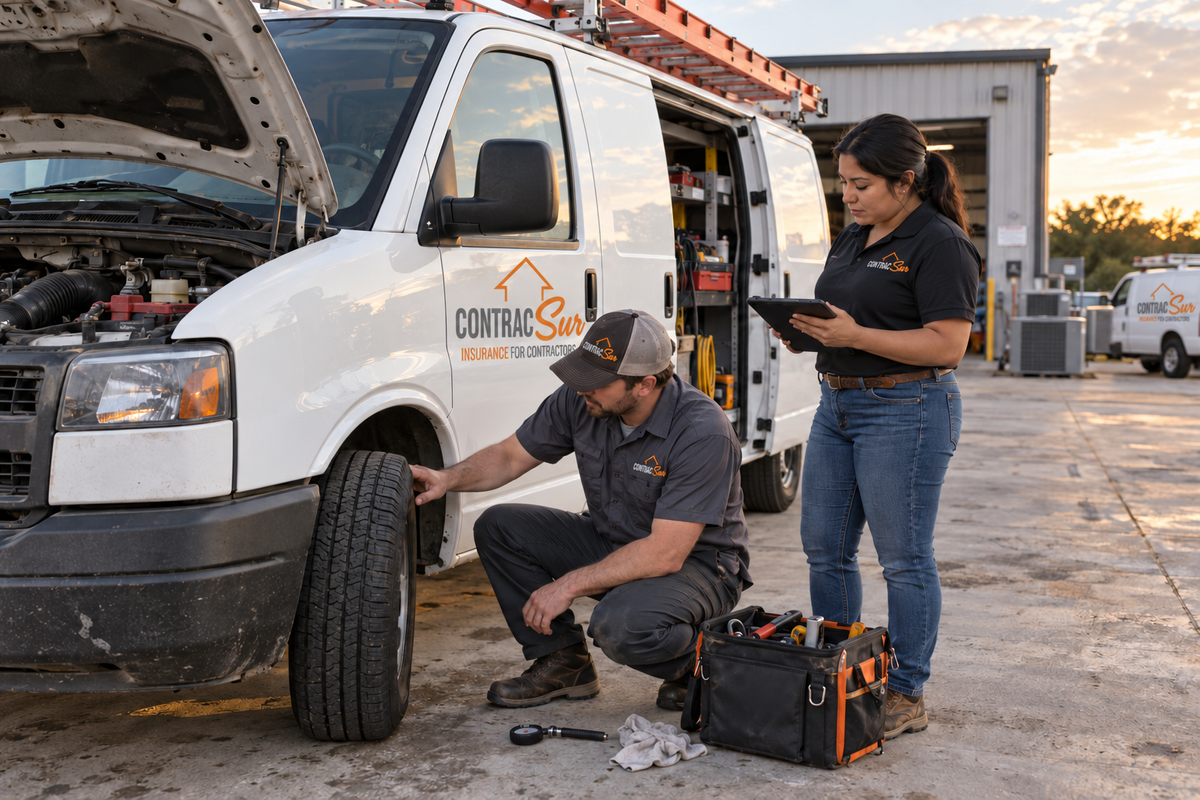
- Tire condition and pressure
- Brakes
- Fluid levels
- Lights and signals
- Windshield and mirrors
- Safety equipment
- Ladder racks and exterior attachments
- Cargo organization and securement
- Registration and inspection requirements
- Accident-reporting information
Document completed maintenance and repairs. If a truck is unsafe or unreliable, address the problem before returning it to service.
Verify Trailer Coverage
Do not assume a trailer and everything carried inside it are automatically insured.
Review each trailer’s:
- Ownership
- Vehicle identification number
- Use
- Value
- Garaging location
- Liability treatment
- Physical-damage coverage
- Deductible
- Attached and portable equipment
Whether a trailer must be specifically listed and how coverage applies depend on the policy and trailer.
Pay particular attention to the difference between liability arising from use of the trailer, physical damage to the trailer itself, and damage or theft involving the tools and equipment it carries.
Review Tools and Equipment Coverage
A Business Auto policy generally should not be treated as automatic coverage for every tool carried inside a service truck or trailer.
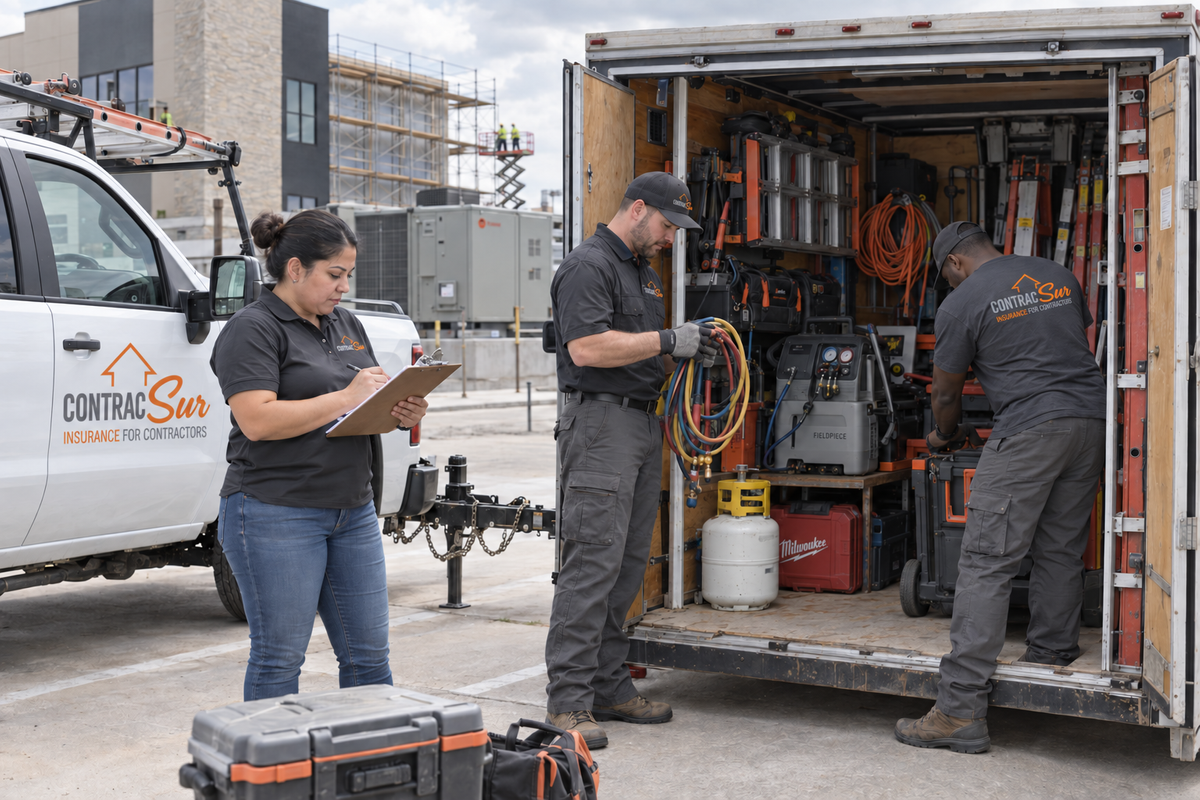
HVAC tools, recovery machines, gauges, diagnostic equipment, and portable machinery may require contractors’ equipment, inland marine, or another property coverage form.
Confirm whether your coverage applies:
- Inside a locked service vehicle
- Inside a trailer
- In transit
- At a temporary jobsite
- Overnight at a project
- At the company shop
- To rented or borrowed equipment
Review limits, deductibles, valuation provisions, theft conditions, and any limitations involving unattended vehicles.
Maintain an updated inventory with serial numbers, purchase records, photographs, and estimated replacement values.
Update Driver Information
Your insurance company needs accurate information about the employees who regularly operate company vehicles.
Before assigning a service truck, confirm:
- The employee has a valid license
- The employee is authorized to drive for the company
- The driver has been reported as required
- The employee meets applicable insurance-company guidelines
- The employee completed company vehicle training
- The employee understands accident-reporting procedures
Establish a consistent process for reviewing driving records when legally permitted and appropriate. Also tell your insurance agent when a driver is hired, changes duties, stops driving, or leaves the company.
Strengthen Fleet Procedures
Written procedures help establish clear expectations for everyone operating a company vehicle.
Your fleet program may address:
- Authorized and prohibited vehicle use
- Seat belts
- Distracted driving
- Mobile-phone use
- Vehicle maintenance
- Fuel cards
- After-hours use
- Traffic violations
- Accident reporting
- Driver training
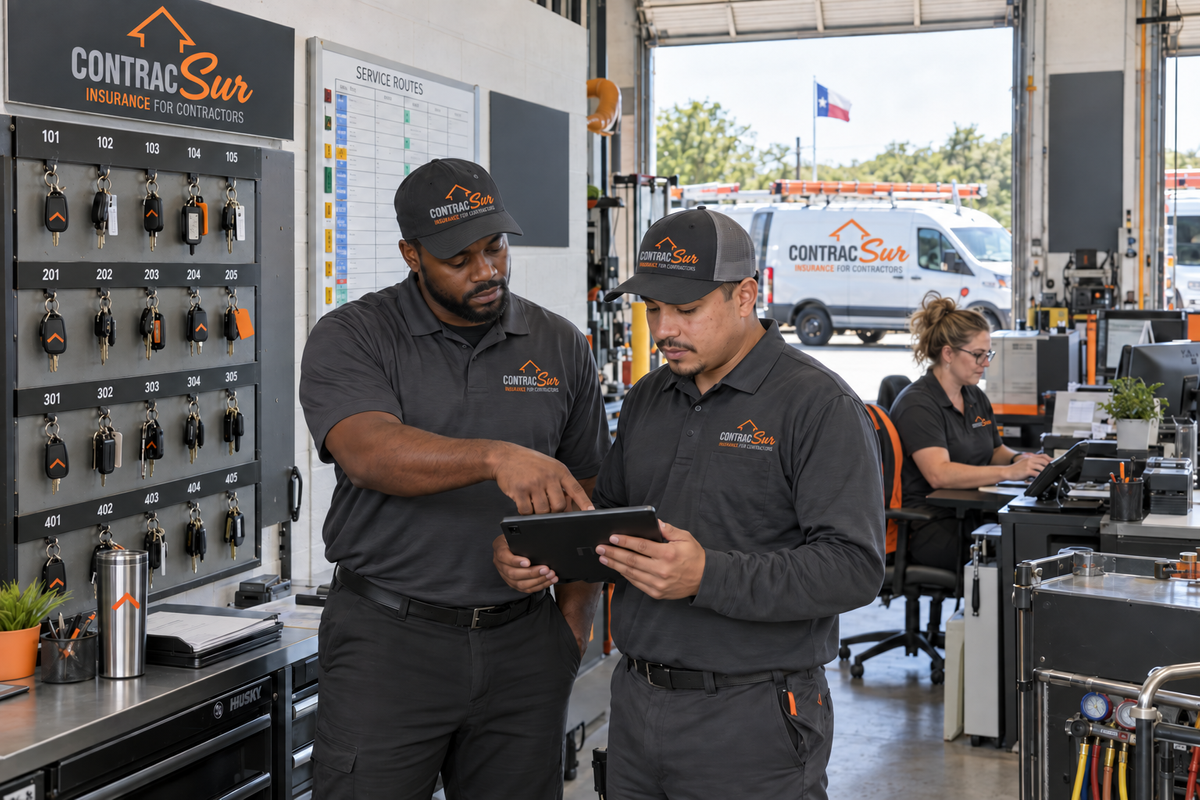
- Keys and vehicle assignments
Telematics may also provide information about mileage, routes, braking, speed, and maintenance. It can support driver coaching and fleet management, although its effect on insurance eligibility or pricing varies by insurance company.
Business Auto Fall Checklist
Before fall service season:
- Confirm every business-owned vehicle is listed correctly
- Review vehicle ownership, use, garaging, and operating radius
- Verify authorized drivers
- Review liability limits
- Review collision and comprehensive selections
- Confirm trailer coverage
- Review tools and equipment coverage
- Check hired- and non-owned-auto exposures
- Inspect and maintain service vehicles
- Update the equipment inventory
- Document driver and accident-reporting procedures
- Request updated certificates when required
Frequently Asked Questions
Does every HVAC service vehicle need Business Auto insurance?
A business-owned or regularly business-used vehicle should be reviewed for Business Auto coverage. The appropriate coverage depends on ownership, use, drivers, garaging, and the policy terms.
Are tools inside an HVAC service truck covered by Business Auto insurance?
Not necessarily. Business Auto coverage should not be assumed to insure portable tools against theft or damage. Contractors’ equipment, inland marine, or another property form may be needed.
Does a trailer need to be listed on the policy?
It depends on the trailer, its ownership and use, and the policy. Confirm whether liability and physical-damage coverage apply and whether the trailer must be specifically scheduled.
How often should an HVAC company inspect its vehicles?
There is no single schedule appropriate for every fleet. Develop procedures based on mileage, use, manufacturer recommendations, vehicle condition, and applicable requirements.
When should a new driver be reported?
Contact your insurance agent when an employee begins driving or when driving duties change. Carrier requirements vary, so do not assume the employee is automatically acceptable or properly reported.
Final Call to Action
Adding vehicles, drivers, trailers, or equipment before fall service season? Make sure your insurance reflects how your HVAC business operates today.
Talk with ContracSur about insurance for your HVAC business or request a quote.
Coverage varies by policy and insurance company. This information is general and is not a substitute for reviewing your policies, endorsements, contracts, vehicles, drivers, and operations.