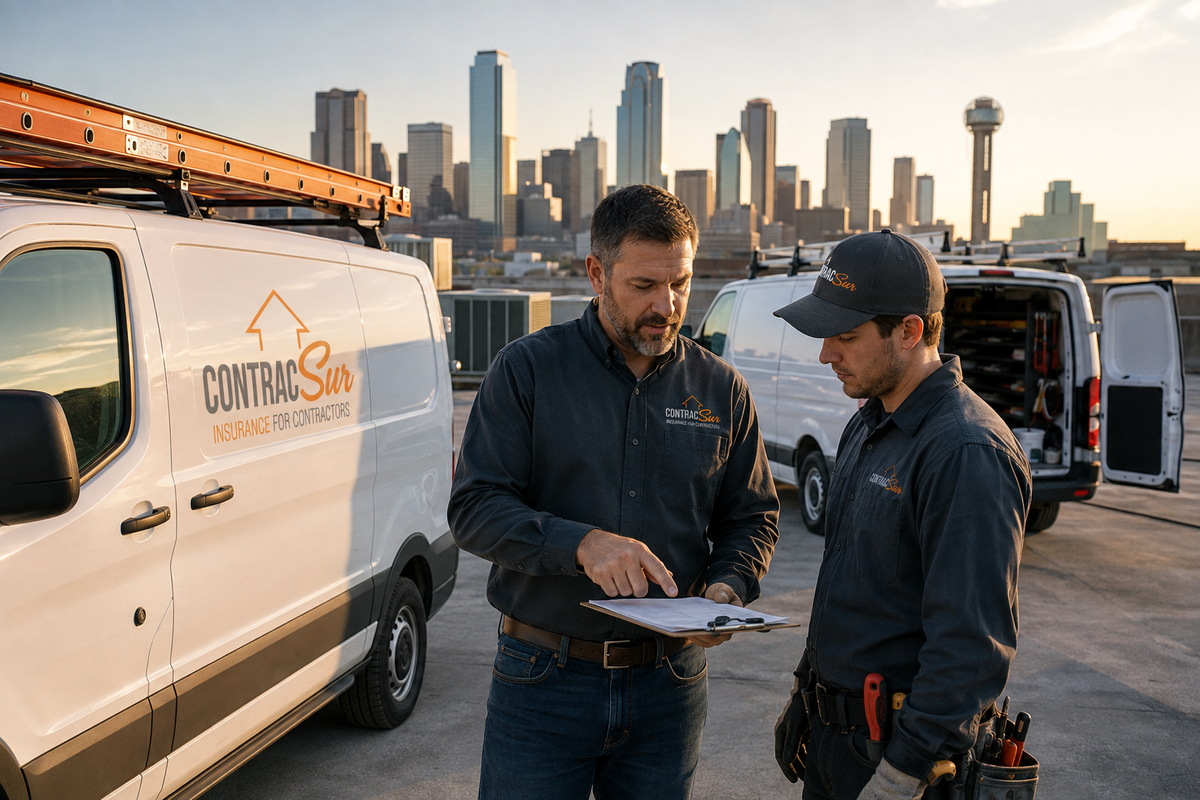
Texas HVAC Team at Sunrise  08-24-26.png

Texas HVAC Insurance Checklist: Adding Service Trucks, Employees, and Payroll

Growth is good—but every new service truck, technician, or type of job can change the information your insurance company uses to cover and price your HVAC business.

Before the new truck rolls or the new employee starts, review your Business Auto, Workers’ Compensation, General Liability, tools and equipment coverage, and certificate requirements.

Use this checklist to keep your insurance aligned with the way your Texas HVAC company actually operates. For help reviewing your current program, talk with ContracSur.

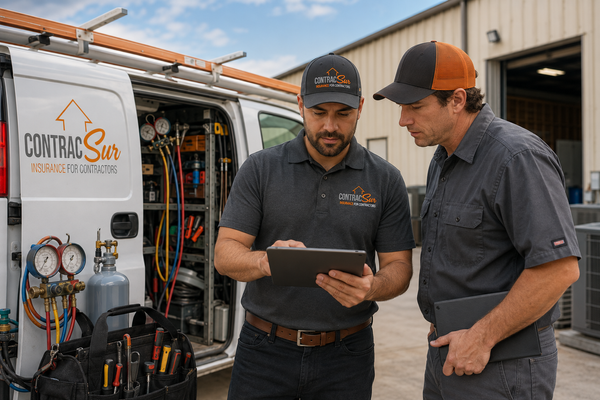
HVAC Team Reviews Business Auto Coverage  08-24-26.png

Business Auto: Adding Trucks and Drivers

HVAC service vehicles do more than transport employees. They carry tools and equipment, travel between jobsites, and may be driven by multiple technicians.

When adding a vehicle, confirm that the policy reflects:

  • The vehicle’s registered owner
  • How it will be used
  • Where it is garaged
  • Its normal operating area
  • The employees authorized to drive it
  • The liability and physical-damage coverage selected

A personal auto policy may not be appropriate for a business-owned vehicle or a truck regularly used for HVAC service calls. The answer depends on the vehicle’s ownership, use, drivers, and the policy’s actual terms.

Review every driver

Before allowing an employee to drive a company vehicle, verify the employee’s license and confirm that the driver meets the insurance company’s requirements.

Establish a consistent process for reviewing driving records, reporting accidents, maintaining vehicles, and notifying your insurance agent when drivers change.

Consider telematics

Telematics can provide information about mileage, routes, hard braking, speed, and vehicle maintenance. Used correctly, that information may help improve driver training and reduce accidents or downtime.

Some insurance companies offer programs or pricing considerations for telematics, but participation does not guarantee lower premiums.

One more important point: Business Auto insurance doesn’t automatically insure all the tools and equipment carried inside a service vehicle. Those items may require separate coverage.

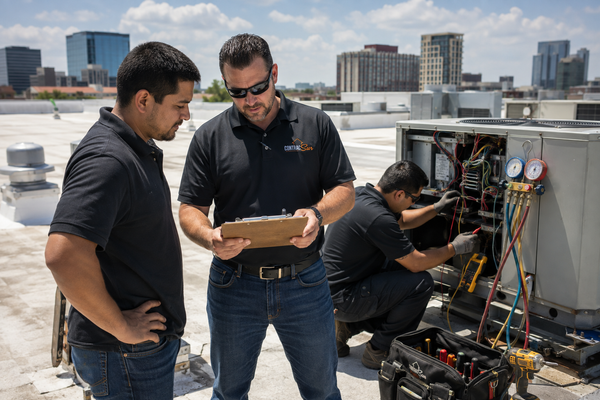
Rooftop HVAC safety and payroll review  08-24-26.png

Workers’ Compensation: Adding Employees and Payroll

Adding a technician changes more than your payroll. It may also change job classifications, estimated payroll, driving exposure, and the duties being performed at customer homes and commercial jobsites.

Texas does not require most private employers to carry workers’ compensation. However, coverage may be required by a general contractor, customer, government project, lease, or other agreement. Employers that operate without coverage also have state notice and reporting responsibilities.

When hiring, review:

  • The employee’s actual job duties
  • The workers’ compensation class code
  • Estimated annual payroll
  • Whether the employee will drive
  • The jobsites and projects where the employee will work
  • Safety training and supervision

Payroll and class codes

Workers’ compensation premiums are commonly based partly on payroll and classifications. An HVAC technician working in the field may present a different exposure than an office employee.

Keep payroll estimates current and place employees in classifications that match their actual work. Your insurance company may audit the policy after the term ends and compare estimated payroll with actual payroll.

Accurate records help reduce unexpected audit adjustments.

Claims history and return to work

For qualifying businesses, an experience modification factor may reflect past claims experience compared with similar employers. Safety training, prompt claim reporting, and effective claim management can help improve results over time, although they don’t guarantee a particular modification or premium.

A return-to-work program can also help an injured employee resume appropriate duties when medically permitted. Any modified work should follow the employee’s medical restrictions and be coordinated with the claim professionals involved.

General Liability, Tools, and Contract Requirements

General Liability insurance can help address certain third-party bodily injury and property damage claims arising from HVAC operations, subject to the policy’s terms, conditions, and exclusions.

It does not replace Business Auto, Workers’ Compensation, or coverage for your own tools.

Review liability limits

As your company grows, contracts may require higher limits or specific endorsements. Review:

  • General Liability limits
  • Business Auto limits
  • Employer’s Liability limits
  • Umbrella or Excess Liability options
  • Additional-insured requirements
  • Primary and noncontributory requirements
  • Waivers of subrogation

The right limits depend on your operations, contracts, assets, and potential exposures—not only the number of employees.

Protect tools and equipment

Tools are essential to an HVAC business, but they may not be covered by General Liability insurance.

Depending on the property and how it is used, coverage could include contractors’ equipment, inland marine, or another property form. An installation floater may be appropriate for equipment or materials awaiting installation, but it is not necessarily a replacement for coverage on the company’s everyday tools.

Confirm whether coverage applies:

  • At your shop
  • Inside service vehicles
  • In transit
  • At temporary jobsites
  • Overnight at a project
  • To rented or borrowed equipment

Also review deductibles, valuation provisions, limits, and theft requirements.

Keep COIs and endorsements current

Customers and general contractors commonly request Certificates of Insurance before work begins.

A COI provides information about existing policies, but it does not change those policies or create coverage by itself. If a contract requires additional-insured status, a waiver of subrogation, or another coverage provision, the appropriate endorsement must be included in the policy.

Send insurance requirements to your agent early. Waiting until the day a project starts can cause avoidable delays.

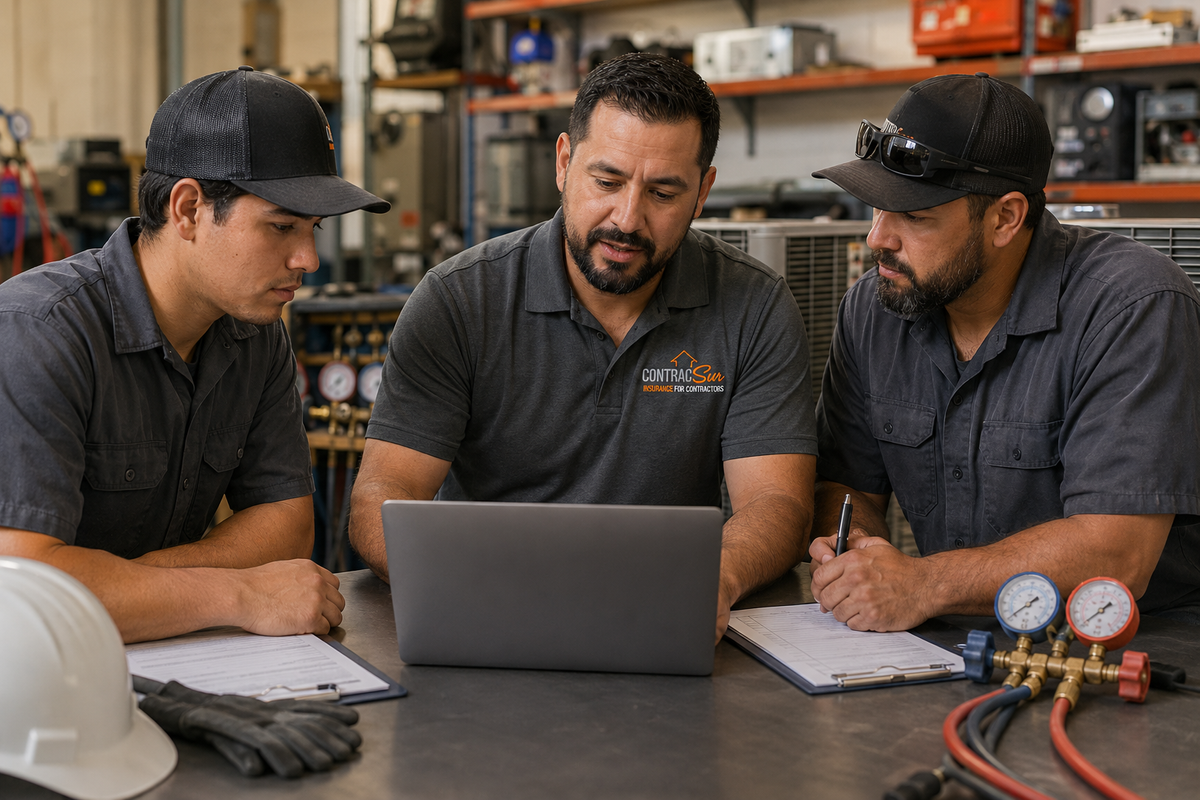
Texas HVAC Payroll and Safety Review  08-24-26.png

HVAC Growth ChecklistBefore a new service truck begins operating

  • Confirm ownership and business use
  • Add the vehicle to the correct policy
  • Review drivers with your insurance agent
  • Confirm liability and physical-damage selections
  • Document driver and vehicle-safety procedures
  • Review coverage for tools carried inside the vehicle

Before a new employee starts

  • Document the employee’s actual duties
  • Review payroll estimates and class codes
  • Confirm whether the employee will drive
  • Complete safety and vehicle training
  • Review Workers’ Compensation requirements
  • Update any required COIs and endorsements

When your operations change

Contact your insurance agent when you:

  • Add a vehicle or driver
  • Hire field employees
  • Enter a new type of HVAC work
  • Begin working in new territories
  • Purchase expensive equipment
  • Sign contracts with new insurance requirements
  • Experience a significant payroll change

Frequently Asked QuestionsDoes an HVAC service truck need Business Auto insurance?

A business-owned or regularly business-used HVAC vehicle should be reviewed for Business Auto coverage. Vehicle ownership, use, drivers, garaging, and the policy terms determine what coverage is appropriate.

Is Workers’ Compensation required for Texas HVAC contractors?

Most Texas private employers can choose whether to carry it. However, contracts, government projects, and general contractors may require coverage. Employers without coverage also have state notice and reporting responsibilities.

Are HVAC tools covered by General Liability insurance?

General Liability generally isn’t designed to insure the contractor’s own tools against theft or damage. Contractors’ equipment or inland marine coverage may be needed.

Does a Certificate of Insurance add coverage?

No. A COI provides evidence of existing insurance. Additional-insured status, waivers, and other requested provisions generally require the corresponding policy endorsements.

Can telematics lower Business Auto premiums?

It may support safer driving and better fleet management, and some insurance companies offer telematics programs. However, participation doesn’t guarantee a lower premium.

Final call to action

Adding a truck, technician, or new type of HVAC work? Make sure your insurance reflects how your company operates today.

Learn more about insurance for Texas HVAC contractors or request a quote from ContracSur.

Coverage varies by policy and insurance company. This information is general and is not a substitute for reviewing your policy, endorsements, contracts, and specific operations.